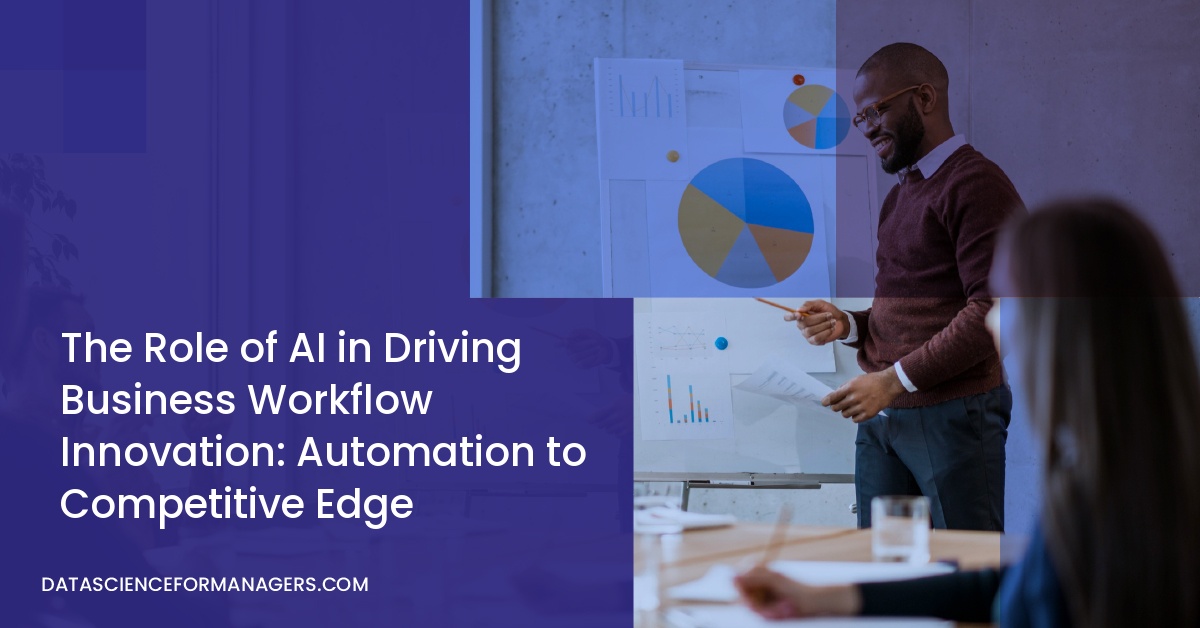



Artificial Intelligence (AI) isn’t just a buzzword; it’s transforming how businesses operate. From automating mundane tasks to providing deep insights through data analysis, AI is revolutionizing workflows across industries. Companies that harness AI effectively gain a competitive edge by streamlining processes and boosting productivity.
I’ve seen firsthand how AI can drive innovation in business workflows. It enables smarter decision-making, enhances customer experiences, and even predicts market trends. As AI technologies continue to evolve, their role in shaping the future of business becomes increasingly significant. Let’s explore how AI is driving this wave of innovation and what it means for the future of work.
Understanding AI and Business Workflows
AI and business workflows converge to create substantial improvements in operational processes. AI makes data-driven decisions faster and more accurately, aiding in task automation. When AI integrates with existing workflows, businesses see increased efficiency and streamlined operations. Enterprises benefit from AI by automating routine tasks like data entry and customer service inquiries, freeing employees to focus on strategic activities.
Incorporating AI into workflows enhances decision-making. AI algorithms analyze vast datasets for patterns and trends, identifying insights that may not be obvious to human analysts. This predictive capability empowers managers to make informed decisions, improving business outcomes. For instance, AI can predict supply chain disruptions by analyzing factors such as weather patterns and geopolitical events, helping companies to mitigate risks proactively.
AI also drives innovation in customer relationship management (CRM). AI-powered tools analyze customer interactions across multiple touchpoints, offering personalized recommendations and support. This improves customer satisfaction and loyalty. An example is AI chatbots that provide real-time assistance, resolving queries efficiently and improving the overall customer experience.
Furthermore, AI helps predict market trends. By examining historical data and current market conditions, AI algorithms forecast future demands and preferences. Businesses leverage these forecasts to plan inventory, marketing strategies, and product development. For example, retailers use AI-driven insights to determine which products are likely to see a surge in demand during certain seasons.
Integrating AI into business workflows ensures continuous improvement and adaptation to evolving business landscapes. Companies that adopt AI technologies stay ahead of their competitors by being more agile and responsive to changes. AI not only optimizes existing processes but also creates new pathways for business growth and innovation across industries.
Key Innovations in AI-driven Workflows
AI continues to revolutionize business workflows by introducing innovative solutions that streamline operations and enhance decision-making processes. Let’s delve into some key innovations driving this transformation.
Automation of Routine Tasks
Automating routine tasks is one of the most impactful uses of AI in business workflows. Companies use AI-powered bots and software to handle repetitive tasks like data entry, scheduling, and customer inquiries, freeing up employees to focus on more strategic initiatives. For example, chatbots manage customer service queries, reducing the need for human intervention and speeding up response times. Automation minimizes errors, improves efficiency, and ensures that tasks are completed consistently.
Enhanced Decision Making with AI
AI significantly enhances decision-making by processing and analyzing large volumes of data quickly and accurately. It identifies patterns and trends that might go unnoticed in manual reviews, enabling managers to make informed decisions based on concrete insights. For instance, AI tools examine sales data to uncover buying patterns, helping businesses adjust their strategies dynamically. This real-time analysis allows companies to respond to market changes promptly and make proactive business decisions.
Predictive Analytics and Forecasting
Predictive analytics and forecasting represent another crucial AI innovation in business workflows. AI algorithms analyze historical data and current market conditions to predict future trends and outcomes. Businesses use these predictions to plan inventory, manage supply chains, and develop marketing strategies. For example, retail companies forecast demand for various products, ensuring they stock sufficient levels to meet customer needs. Predictive analytics helps businesses stay ahead of trends and make data-driven decisions that enhance their competitive edge.
Case Studies of AI in Business Workflow Innovation
AI profoundly impacts a variety of industries by revolutionizing workflow processes. Here’re some significant case studies.
Manufacturing Sector
AI optimizes production lines, reducing downtime and increasing efficiency. For example, Siemens uses AI algorithms to predict equipment failures and schedule maintenance. This predictive maintenance minimizes unexpected downtimes, ensuring continuous production. In another instance, General Electric integrates AI to analyze sensor data from machines, optimizing operations and reducing energy consumption.
Financial Services
AI enhances fraud detection and customer service. JPMorgan Chase employs AI to analyze vast datasets, identifying suspicious transactions in real-time and reducing fraud-related losses. Similarly, Wells Fargo utilizes AI-driven chatbots to provide 24/7 customer support, significantly improving customer satisfaction.
Healthcare Industry
AI advances diagnostic accuracy and patient care. IBM Watson Health leverages AI to analyze medical records, assisting doctors in diagnosing and creating treatment plans. Another example is Mayo Clinic, which uses AI to predict patient deterioration, allowing timely interventions and improving patient outcomes. AI also streamlines administrative workflows, reducing the clerical burden on healthcare workers and enabling them to focus on patient care.
Challenges and Considerations
AI integration in business workflows isn’t without challenges. Carefully considering these can lead to more careful implementation and better outcomes.
Data Privacy and Security
AI systems handle vast amounts of sensitive data, making data privacy and security paramount. Breaches and unauthorized access can lead to significant repercussions, both financially and reputationally. Regulatory compliance is crucial, with laws like GDPR (General Data Protection Regulation) setting stringent guidelines on data handling and usage. Companies must employ robust encryption methods and regular security audits to safeguard consumer information. For example, encrypting customer data and performing penetration tests can help mitigate the risk of data breaches.
Integration with Existing Systems
Existing systems often present hurdles when integrating AI. Compatibility issues can arise, making seamless integration complex. Legacy systems, in particular, may lack the capability to support AI functionalities, necessitating upgrades or replacements. Businesses need to evaluate their current infrastructure’s capability to incorporate AI technologies effectively. Transitioning to AI-integrated workflows involves training employees to understand and operate new technologies. Coordination between IT departments and business units is essential for successful integration. For instance, aligning AI tools like machine learning algorithms with existing CRM software can optimize sales forecasting and customer service.
Future Trends in AI-driven Workflow Innovation
AI continues to evolve, introducing new trends that reshape business workflows. I see three key trends emerging in AI-driven workflow innovation: hyperautomation, AI ethics, and emotional AI.
Hyperautomation involves the use of AI to automate increasingly complex tasks. This trend leverages tools like machine learning (ML), robotic process automation (RPA), and natural language processing (NLP). For example, UiPath and Blue Prism deploy hyperautomation solutions to streamline processes in finance and healthcare. Hyperautomation reduces operational costs and improves efficiency.
AI ethics focuses on developing fair, transparent, and accountable AI systems. Companies are adopting ethical guidelines to ensure AI applications respect privacy and avoid bias. Microsoft and Google have introduced ethical frameworks for their AI technologies. Implementing AI ethics builds trust and ensures responsible innovation.
Emotional AI, or affective computing, involves systems that can recognize, interpret, and respond to human emotions. Businesses use emotional AI in customer service to improve interactions. For instance, call centers implement voice analysis software to gauge customer sentiment, enhancing service quality. Emotional AI creates more personalized customer experiences.
Incorporating these trends into business workflows drives continuous improvement and innovation. Understanding and leveraging these trends is crucial for staying competitive in the evolving business landscape.
Conclusion
AI’s role in driving business workflow innovation is undeniable. By automating tasks and providing valuable insights, it’s revolutionizing how companies operate. I’ve seen firsthand how AI enhances decision-making and customer experiences, making businesses more agile and competitive.
As AI technologies continue to evolve, their integration into workflows will only deepen, offering even greater efficiencies and innovations. To stay ahead, businesses must embrace these advancements while addressing challenges like data privacy and system integration.
By leveraging AI’s capabilities and staying informed on emerging trends, companies can unlock new growth opportunities and achieve sustainable success in an ever-changing market.

- Data Analytics in Plant Automation: A Manager’s Complete Guide to ROI - February 14, 2026
- Data-Driven Property Investment in London: A Strategic Advantage - December 21, 2025
- Data-Driven Decision Making: Optimizing Escrow Performance with Analytics - November 23, 2025