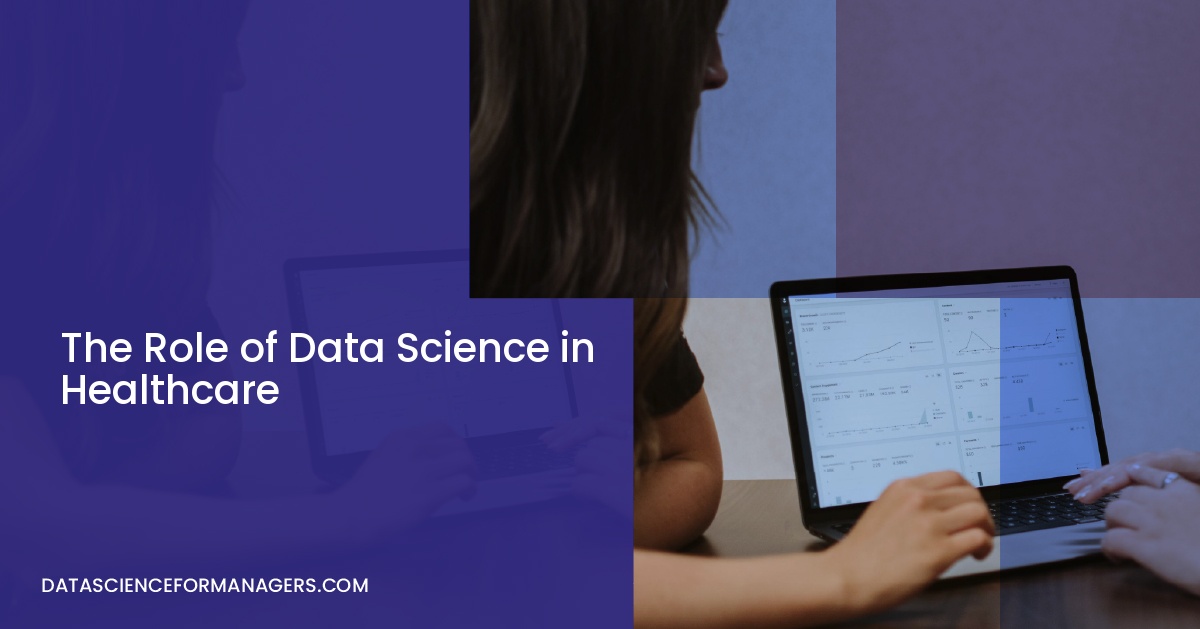



The rising demand for flexible clinical studies and better patient outcomes has driven the healthcare industry toward data science. The implementation of data science has brought about a transformative shift in how healthcare professionals diagnose, treat, and manage diseases. Data science helps create personalized treatments and advanced analysis, leading to more efficient and patient-focused care. In this article, we’ll explore the role of data science in health care.
What is Data Science in Healthcare?
Data science is an interdisciplinary study area that uses advanced analytics to interpret large datasets and extract useful insights for healthcare. The goal is to help healthcare professionals find data patterns and trends to improve processes and create personalized treatments. Understanding large patient data with data science helps detect diseases early, develop new treatments, and find underrepresented groups in trials.
However, hospitals only use 3% of the 50 petabytes of data they create each year properly. Using more of this data could greatly improve decision-making in healthcare. Data science is growing quickly in healthcare. The big data market is expected to reach $105.73 billion by 2030. This growth means more jobs for data scientists.
Why Healthcare Needs Data Scientists
As an indispensable part of the healthcare industry, a data scientist:
- Helps develop systems that streamline a range of administrative processes – billing, recording, etc.
- Facilitates the study of different terminal diseases and helps develop life-improving therapeutics
- Helps develop tools and techniques that enable patients to self-track their health metrics.
Needless to mention, this is not an exhaustive list. Data scientists are leaving their imprint in multiple impactful ways in the healthcare sector.
Data Science Skills and Techniques in Healthcare
The shift toward digitisation has led to the confluence of technology and healthcare making scientists develop newer data-fed systems. The sheer volume of data generated by the multilayered healthcare sector, such as patient records, treatment plans, patient history, etc., has also fueled this transition. As a result, the use of data science techniques in healthcare has increased.
Different data science techniques being employed in streamlining different healthcare aspects are: Artificial Intelligence (AI) AI is reinventing — and reinvigorating — today’s healthcare system by deploying deep learning, machine learning, and natural language processing (NLP). Integrating these advanced technologies has made AI augment the experience for both patients and healthcare providers. For example, with its predictive and high-speed data-processing capabilities, AI can help caregivers optimise their resource usage, proactively mitigate healthcare issues, and fortify patient outcomes.
For example, AI’s capabilities to dig deeper into voluminous data sets – both structured and unstructured – can enable faster disease diagnosis.
Again, AI has emerged as a transformative force in the drug research and development market that has been bogged down by substantial capital and operational costs. AI, in tandem with advanced analytics capabilities, has enabled CROs to transition from on-site clinical trials to decentralised ones.
Furthermore, leveraging the capabilities of AI to support digital communication helps Healthcare organisations enable real-time patient monitoring, and reporting, schedule reminders, tailor healthcare tips for patients, and more. The result is faster diagnosis of health issues, and enhanced accuracy of patient visits, ultimately helping personalise therapeutics.
Pattern recognition, a key component of AI, is widely used to analyse data and specify patterns, risk factors, and correlations between different variants of a certain healthcare study. As a result, healthcare providers can get in-depth insight into patient outcomes that may be tough through traditional processes.
The key role here is played by data scientists who ensure the effective utilisation of AI for optimal operational efficacy.
Data Mining Data mining leverages AI algorithms to sift through and analyse a massive trove of data. In health care, data mining is used to identify trends and patterns and establish a correlation between clinical trials, patient history, and medical research. Medical professionals can also diagnose drug interactions, drug composition, and risk assessment in healthcare insurance.
Genomics Genomics deals with decoding the genetic makeup of living organisms, helping scientists develop effective therapeutics like gene therapy. Genomic data science leverages techniques such as big data analytics, advanced ML algorithms, NLP, etc., to help data scientists accelerate biomedical research, the process of precision medicine development, the diagnosis of genetic diseases, etc.
Machine Learning A subset of AI, ML algorithms are widely used by data scientists to help the healthcare industry efficiently analyse, manage, and use the vast volume of healthcare data. From medical imaging to genomic data, ML algorithms can be used to analyse a range of healthcare information. The result is enhanced and accelerated disease diagnosis, personalised treatment plans, and better prediction of patient outcomes that drive operational efficiency.
Statistical Analysis Statistical analysis techniques such as regression, clustering, predictive modelling, descriptive statistics, etc., are widely used by data scientists to help caregivers analyse and interpret patient records, clinical trial outcomes, public health trends, etc. Effective utilisation of this sheer volume of data augments decision-making, accelerates drug development, and improves overall patient care. Implementing an evidence-based approach to data analysis also helps assess the effectiveness of a newly developed drug, streamline healthcare processes, and track down the risk factors associated with a therapeutic intervention.
Benefits of Data Science in Healthcare
Reduces Treatment Failure Rate: Effective utilisation of an evidence-based approach to healthcare helps get an in-depth insight into patients’ health, personalise treatment plans, and predictive analytics. Thus, they can better assess risk factors associated with treatment, make data-based decisions, and shift the paradigm to a much lower failure rate.
Streamlines Workflow: The capability to automate routine tasks, report generation, billing, and auditing with data science tools streamline healthcare workflows. In addition, by enabling efficient analysis of patient data, operational data, patient flow, and health outcomes, data science tools help track down setbacks and inefficiencies in healthcare operations.
Better Treatment: Getting in-depth insight into patient health, patient history, and predictive analytics helps caregivers personalise medicine. Thus, therapeutics tailored to specific patient needs can be developed and rolled out to market faster.
Shortens Treatment Time: Advanced data analytics techniques such as predictive modeling and Ml algorithms help optimise healthcare processes and accelerate diagnosis for improved efficacy, thus ultimately shortening the treatment pathway.
These gains in treatment efficiency and therapeutic outcomes do not emerge in a vacuum — they are the product of hard-won experience accumulated across real clinical deployments, failed pilots, and iterative refinements. A closer examination of healthcare data science lessons from the field reveals that the same evidence driving shorter treatment timelines and stronger patient outcomes also exposes a set of structural, ethical, and operational complexities that organizations must confront before data science can be applied at scale. Understanding where progress has been made is, in many ways, the clearest guide to where the most significant obstacles still remain.
Challenges with Data Science in Healthcare
Data science, by extracting valuable insights from a vast volume of healthcare data, can transform the sector. However, the journey towards harnessing the full potential of data science in healthcare is fraught with intricacies. For example, dealing with patients’ confidential information requires efficient and ethical data management. That said, any failure to data mismanagement can make sensitive personal information vulnerable to cyberattacks. And using outdated systems makes data more prone to cyberattacks.
Beyond confidentiality, the deployment of data science in healthcare raises a broader set of ethical questions that organizations must address with equal rigor. Issues such as algorithmic bias, informed consent, and the equitable use of predictive models can have profound consequences for patient outcomes and institutional trust. A thorough understanding of the ethical implications of data science in practice is therefore essential for any healthcare organization seeking to responsibly integrate data-driven decision-making into its operations, particularly before examining the specific threat landscape that puts sensitive data at risk.
Even worse, any compromise in patient data can cause the industry to face serious and long-term repercussions. For example, according to a study, 43% of the respondents partaking in a survey reported their HDOs facing a ransomware attack. Again, while 45% of them reported that cyberattacks result in disruption in health care, 22% reported an increase in mortality rates.